
Timing Belt vs V-Belt: Which One Is Right for Your System?
Choosing the right belt drive system is important for achieving reliable machine performance, efficient power transmission, and long-term operational stability. Among the most commonly used power transmission solutions are timing belts and V-belts. While both are designed to transfer power between pulleys, they operate differently and are suitable for different industrial applications. Understanding the differences between these two belt types can help businesses select the most efficient option for their machinery and production systems.
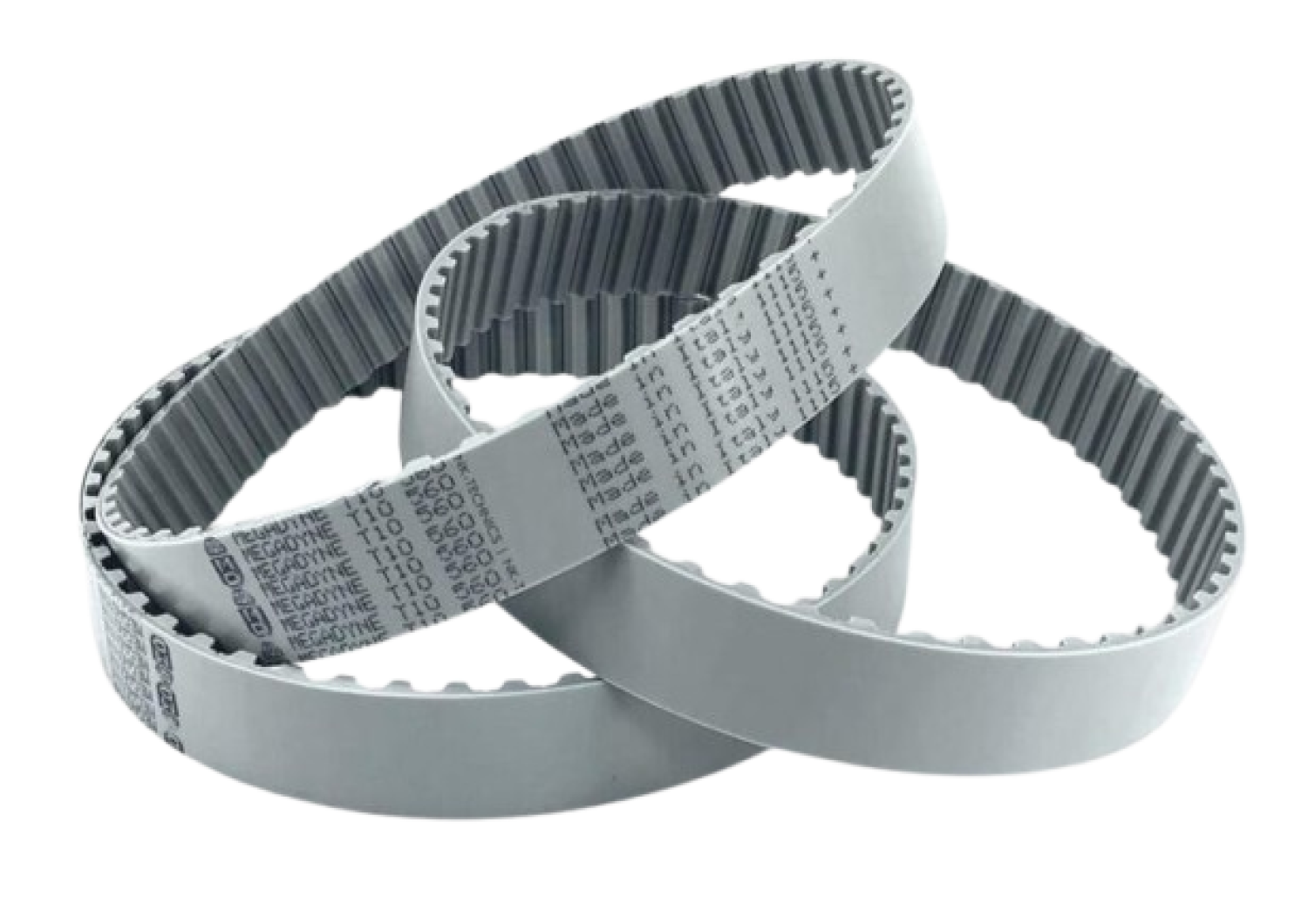
The primary difference between a timing belt and a V-belt lies in the way power is transmitted. A timing belt features precisely designed teeth that engage directly with matching grooves on the pulley. This tooth engagement creates synchronous motion, ensuring that the driven pulley rotates exactly in sync with the driving pulley without slipping. In contrast, a V-belt operates using friction between the belt surface and the pulley grooves. Because of this friction-based mechanism, slight slipping may occur during operation, especially under varying load conditions.
Timing belts are widely preferred in applications where precision and synchronization are critical. Since they eliminate slippage, they maintain a constant speed ratio and accurate positioning throughout operation. This makes them highly suitable for automation systems, CNC machines, packaging equipment, textile machinery, printing machines, and robotic systems where controlled movement and repeatable accuracy are essential. Timing belts also offer quieter operation, reduced maintenance requirements, and cleaner performance because they generally do not require lubrication.
On the other hand, V-belts are commonly used in applications where exact synchronization is not necessary and where systems may experience sudden load changes or vibrations. Their ability to absorb shock loads makes them ideal for pumps, compressors, fans, agricultural machinery, and general industrial equipment. V-belts are often considered a cost-effective solution because they are simple to install, readily available, and suitable for a wide range of power transmission applications. Their flexibility also allows them to perform efficiently in systems with moderate alignment variations.
Selecting between a timing belt and a V-belt depends entirely on the operational requirements of the system. If the application demands accurate motion control, fixed speed ratio, and slip-free performance, a timing belt is the better choice. However, if the system prioritizes economical power transmission, shock absorption, and operational flexibility, a V-belt can provide an efficient and practical solution. Evaluating factors such as load conditions, speed accuracy, maintenance requirements, and overall system performance can help determine the most suitable belt for any industrial application.
Need Industrial Products?
Supreme Engineers supplies high-quality industrial components and customized engineering solutions for various applications.
Enquire Now