
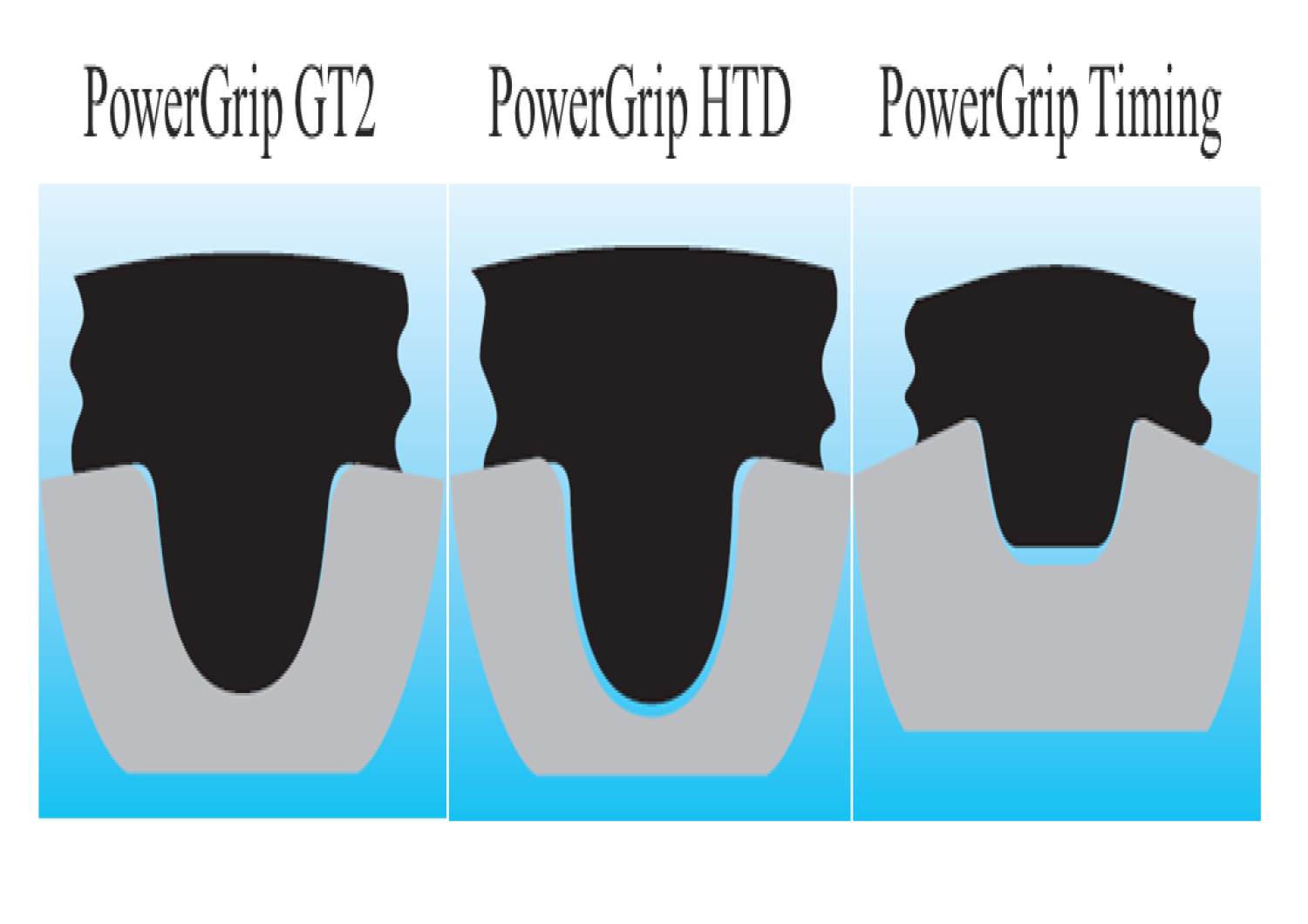
HTD vs GT2 Timing Pulleys – Key Differences Explained
Timing pulleys play a crucial role in mechanical systems, particularly in automation, 3D printing, CNC machines, and industrial applications. Among the various types of timing pulleys available, HTD (High Torqu Drive) Timing Pulleys and GT2 (Gates Tooth Profile) Timing Pulleys are two of the most commonly used. However, their design, performance, and applications differ significantly.
We will explore the key differences between HTD vs GT2 Timing Pulleys, their applications, and which one you should choose for your specific needs.
What is an HTD Timing Pulley?
HTD (High Torque Drive) timing pulleys are designed for applications requiring high torque transmission and superior load-carrying capabilities.
They are typically used in industrial automation, robotics, and heavy machinery.
Features of HTD Timing Pulleys:
- Tooth profile: Curved tooth design for better grip and reduced backlash
- Standard pitch sizes: 3mm, 5mm, 8mm, and 14mm
- Application: Suitable for high-power transmission
- Efficiency: Higher torque transmission compared to traditional pulleys
- Material: Aluminum, steel, and plastic variations
Advantages of HTD Timing Pulleys:
- Excellent load distribution due to curved teeth
- Lower backlash compared to trapezoidal pulleys
- High efficiency in torque transmission
- Longer belt life due to improved engagement
What is a GT2 Timing Pulley?
GT2 (Gates Tooth Profile) timing pulleys are specifically designed for applications that require high precision and minimal backlash.
They are commonly used in 3D printers, CNC machines, and small automation systems.
Features of GT2 Timing Pulleys:
- Tooth profile: A rounded tooth design that eliminates backlash
- Standard pitch sizes: 2mm (popular in 3D printing)
- Application: Suitable for precision motion control
- Efficiency: Less friction and better accuracy
- Material: Aluminum, steel, and plastic variations
Advantages of GT2 Timing Pulleys:
- Ideal for high-precision applications like 3D printing
- Minimal backlash for accurate motion control
- Smooth and silent operation
- Efficient power transmission at lower loads
HTD vs GT2 Timing Pulleys – Key Differences
|
HTD Timing Pulleys |
GT2 Timing Pulleys |
||
|
Tooth Profile |
Curved teeth |
Rounded teeth |
||
|
Pitch Sizes |
3mm, 5mm, 8mm, 14mm |
2mm |
||
|
Best For |
Heavy load, high torque applications |
Precision motion control |
||
|
Applications |
Robotics, conveyors, heavy machinery |
3D printers, CNC machines |
||
|
Backlash |
Moderate |
Minimal |
||
|
Efficiency |
High torque transmission |
High precision |
Which One Should You Choose?
Choosing between HTD and GT2 timing pulleys depends on your specific application:
● If you need high torque transmission and durability for industrial applications, HTD timing pulleys are the best choice.
● If you need precision movement with minimal backlash, especially in 3D printing and CNC applications, then GT2 timing pulleys are more suitable.
Industries use
HTD Timing Pulleys:
- Heavy-duty machines
- Industrial conveyors
- Robotics applications
- Power transmission systems
GT2 Timing Pulleys:
- 3D printers
- CNC machines
- Laser cutters
- Small automation projects
Understanding the differences between HTD vs GT2 timing pulleys is crucial for selecting the right component for your needs. While HTD timing pulleys excel in high torque and industrial applications, GT2 timing pulleys are ideal for precision motion control.
For high-quality timing pulleys in India and the USA, explore reputed manufacturers and suppliers to get the best product for your application.
Need expert guidance?
Let us know in the Visite Supreme Engineers!
FAQs
Q1: How do I choose the right timing pulley?
Choosing the right timing pulley depends on factors like torque requirements, speed, load capacity, and application. For high torque applications, HTD pulleys are ideal, while GT2 pulleys are better for precision movement, such as in 3D printing.
Q2: Can I replace an HTD timing pulley with a GT2 pulley?
Not always. HTD and GT2 pulleys have different tooth profiles, which means their belts are not interchangeable. You must use the correct pulley and belt combination to ensure smooth operation.
Q3: What materials are HTD and GT2 timing pulleys made of?
Timing pulleys are commonly made from aluminum, steel. Aluminum is lightweight and durable, steel is stronger for heavy loads, and plastic is used in lightweight applications where cost is a factor.
Q4: Are HTD and GT2 timing pulleys expensive?
The cost varies based on size, material, and manufacturer. HTD pulleys used in industrial applications are generally more expensive, whereas GT2 pulleys for 3D printing and robotics are relatively affordable.
Q5: Do HTD and GT2 timing pulleys require lubrication?
No, timing pulleys themselves do not need lubrication. However, proper alignment and tensioning of the belt can reduce wear and extend lifespan.
Q6: How do I measure the correct timing pulley size for my application?
To choose the right pulley size, consider:
● Tooth pitch (distance between teeth)
● Bore diameter (shaft hole size)
● Number of teeth (affects speed and torque)
● Belt compatibility (HTD or GT2)
Q7: Are custom timing pulleys available?
Yes! Supreme Engineers provide custom HTD and GT2 pulleys tailored to specific needs, including custom bore size, material, and tooth profile.
Need Industrial Products?
Supreme Engineers supplies high-quality industrial components and customized engineering solutions for various applications.
Enquire Now