
Industrial Chain

Supreme Engineers offers Industrial Chain solutions for reliable power transmission, conveying, and heavy-duty industrial applications. These chains are widely used in mechanical systems and machinery where durability, reliability, and efficiency are important.

Industrial roller chains are a fundamental component in many mechanical systems and machinery, offering dependable performance across conveyors, automotive systems, agricultural equipment, industrial machinery, and material handling operations.

Roller Chain Power Transmission Material Handling
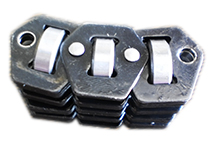
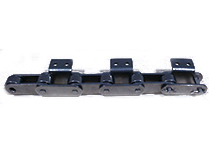
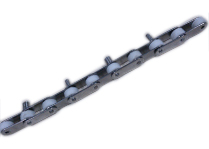
Industrial Chain Industrial Chain application Industrial Chain detail Industrial Chain application Industrial Chain detail Industrial Chain application Industrial Chain detail

About Industrial Chain

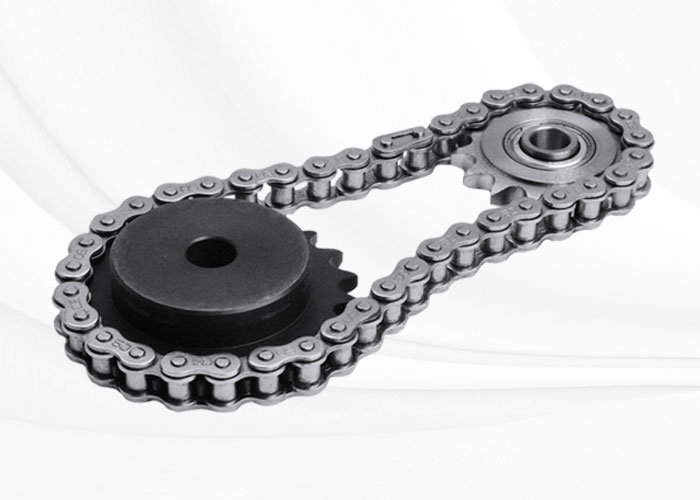
Industrial roller chains are a fundamental component in many mechanical systems and machinery, known for their durability, reliability, and efficiency in power transmission. Here is a detailed look at industrial roller chains:

  • Structure: A typical roller chain consists of roller links, pin links, bushings, and side plates.
  • Roller Links: These have cylindrical rollers that rotate around the sprocket teeth.
  • Pin Links: These provide the structural links between rollers and carry the load.
  • Bushings: These are placed between the rollers and pins to reduce friction and wear.
  • Side Plates: These hold the pins and bushings in place.
  • Material: Roller chains are usually made from high-strength steel to handle heavy loads and harsh conditions. Stainless steel and other alloys may be used for enhanced corrosion resistance.
  • Pitch: This is the distance between the centers of two adjacent pins. Common pitches include 1/2", 5/8", and 3/4".
  • Load Capacity: Roller chains come in various sizes and configurations to handle different loads, from light-duty to heavy-duty applications.
  • Lubrication: Regular lubrication is essential for reducing friction and extending chain life.

Applications

  • Conveyor Systems: Used to move items along production lines or through processing stages.
  • Automotive: Used in engines for timing mechanisms, camshafts, and drive systems.
  • Agricultural Machinery: For driving components in equipment like combines and tractors.
  • Industrial Machinery: Used in machines such as pumps, compressors, and crushers.
  • Material Handling: Used in lifting and transport systems, such as hoists and palletizers.

Maintenance Tips

  • Regular Inspection: Check for signs of wear, elongation, or damage to ensure the chain is functioning properly.
  • Proper Lubrication: Ensure the chain is well-lubricated to minimize friction and wear.
  • Alignment: Make sure that the chain and sprockets are properly aligned to prevent uneven wear and premature failure.
  • Tension Adjustment: Maintain the correct tension to avoid slipping or excessive stress on the chain.

Advantages

Industrial conveyor chains offer several advantages that make them a popular choice for material handling systems across various industries. Here are some key benefits:

  • Durability and Strength: Designed to handle heavy loads and resist wear, making them ideal for demanding industrial applications.
  • High Load Capacity: Suitable for moving robust materials in harsh conditions.
  • Longevity: Made from durable materials like high-strength steel or stainless steel for long service life.
  • Versatility: Available in various configurations to suit different applications and environments.
  • Adaptability: Used across manufacturing, food processing, automotive, and logistics.
  • Efficient Power Transmission: Provides smooth and continuous operation, helping maintain production flow and reduce disruptions.
  • Reliable Performance: Delivers consistent transmission for accurate and efficient movement.
  • Low Maintenance: Properly maintained conveyor chains require less frequent replacement compared to many other systems.
  • Reduced Wear: Good lubrication and alignment improve service life.
  • Ease of Maintenance: Lubrication and tension adjustment are generally straightforward.
  • Customizability: Can be customized with attachments such as flights or sprockets.
  • Modular Design: Some conveyor chains can be modified for system expansion.
  • High Efficiency: Designed for continuous operation, reducing downtime and increasing productivity.
  • Energy Efficiency: When properly aligned and maintained, they can operate with minimal energy consumption.
  • Adaptability to Various Environments: Some chains can withstand extreme temperatures and corrosive conditions.
  • Temperature Resistance: Suitable for environments from freezing conditions to high heat.
  • Corrosion Resistance: Stainless steel or treated versions are useful where moisture or chemicals are present.
  • Precision and Control: Helps provide precise control over movement where exact placement or timing matters.
  • Consistent Speed: Maintains steady movement and synchronization.
  • Enhanced Safety: Better traction and stable transport reduce risk of slippage and mishandling.
  • Stable Transport: Supports secure movement of materials and reduces damage risk.
  • Cost-Effectiveness: Durability and lower maintenance can reduce operating cost over time.
  • Lower Operating Costs: Long-lasting chains can be more economical than frequent-replacement alternatives.
  • Long-Term Investment: Their reliability makes them a cost-effective solution for long-term industrial use.

Applications by Industry

  • Manufacturing: Moving parts between different stages of production.
  • Food Processing: Transporting raw materials, packaged goods, and more.
  • Logistics: Handling packages and goods in warehouses and distribution centers.
  • Automotive: Assembly lines and part handling.

Specification

When specifying an industrial conveyor chain, several key factors need to be considered to ensure it meets the operational requirements of the system. Here is a breakdown of typical specifications and considerations:

  • Chain Type: Roller Chains, Leaf Chains, Block Chains, Slat Chains, and Modular Plastic Chains.
  • Roller Chains: Commonly used for power transmission; available in single, double, or multiple strands.
  • Leaf Chains: Used in lifting applications such as hoists.
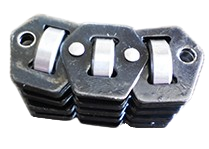
  • Block Chains: Feature blocks for carrying material; used in inclined or horizontal conveyors.
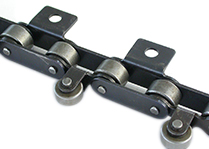
  • Slat Chains: Have slats attached to the chain for transporting products.
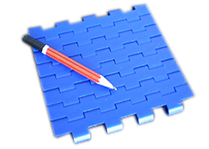
  • Modular Plastic Chains: Made of plastic; offer flexibility and ease of maintenance.
  • Chain Size: Defined by pitch, width, and thickness.
  • Pitch: Distance between pin centers; common sizes include 1/2", 5/8", and 3/4".
  • Width: Determines the width of the chain and the load it can carry.
  • Thickness: The gauge of the chain links, affecting strength and durability.
  • Material: Steel, Stainless Steel, and Plastic depending on application and environment.
  • Steel: High strength and durability; often used for heavy-duty applications.
  • Stainless Steel: Better corrosion resistance; suitable for moisture or chemical exposure.
  • Plastic: Lightweight and corrosion-resistant for less demanding applications.
  • Load Capacity: Includes tensile strength and how load is distributed across links.
  • Tensile Strength: Maximum load the chain can handle before breaking.
  • Load Distribution: How evenly the load is distributed across the chain links.
  • Speed and Operating Conditions: Chain should be selected for speed, temperature, and environmental factors.
  • Speed: Needs to match conveyor system requirements.
  • Temperature: Chain should be rated for the operating temperature range.
  • Environmental Factors: Dust, moisture, and chemicals all affect selection.

Support & Enquiry

Size / Type

Industrial conveyor chains come in several types, each designed for specific applications and operational requirements. Here is an overview of the main types:

  • Roller Chains: Standard Roller Chains and Heavy-Duty Roller Chains.
  • Standard Roller Chains: Used widely for power transmission; available in single, double, or multiple strands.
  • Heavy-Duty Roller Chains: Designed for higher loads and more demanding conditions.
  • Leaf Chains: Single Leaf Chains and Double Leaf Chains, mainly for lifting applications like hoists and forklifts.
  • Single Leaf Chains: Consist of a single row of leaf plates.
  • Double Leaf Chains: Provide increased strength and load capacity.
  • Block Chains: Plain Block Chains and Combination Block Chains.
  • Plain Block Chains: Feature blocks or plates for carrying items.
  • Combination Block Chains: Combine chain and block elements for more versatile handling.
  • Slat Chains: Plastic Slat Chains and Metal Slat Chains.
  • Plastic Slat Chains: Suitable for lighter loads and food-grade applications.
  • Metal Slat Chains: Used for heavier loads and more robust applications.
  • Modular Plastic Chains: Flat Top Chains, Side Flexing Chains, and Curved Chains.
  • Flat Top Chains: Provide a flat surface for smooth and stable conveyance.
  • Side Flexing Chains: Allow the conveyor to bend or turn.
  • Curved Chains: Designed to navigate curves while maintaining product flow.
  • Specialty Chains: Stainless Steel Chains, Heat-Resistant Chains, and Anti-Corrosion Chains.
  • Stainless Steel Chains: Ideal for harsh or hygienic environments.
  • Heat-Resistant Chains: Designed for ovens or hot environments.
  • Anti-Corrosion Chains: Treated or coated to resist rust and degradation.

Frequently Asked Questions

  • What is an industrial chain used for? It is used for power transmission, conveying, lifting, and material handling in industrial systems.
  • What materials are commonly used? High-strength steel, stainless steel, and plastic depending on the application.
  • Why is lubrication important? Lubrication reduces friction, wear, and extends service life.
  • How do I choose the correct chain? Selection depends on chain type, pitch, width, load, speed, and operating environment.
  • Can industrial chains be customized? Yes, custom and application-specific solutions can be developed based on requirements.